SDB-13 // Fairbairn–Sykes
The fighting knife of the British Commandos was designed for one purpose. Its refusal to be anything else is what made it an icon.
Overview
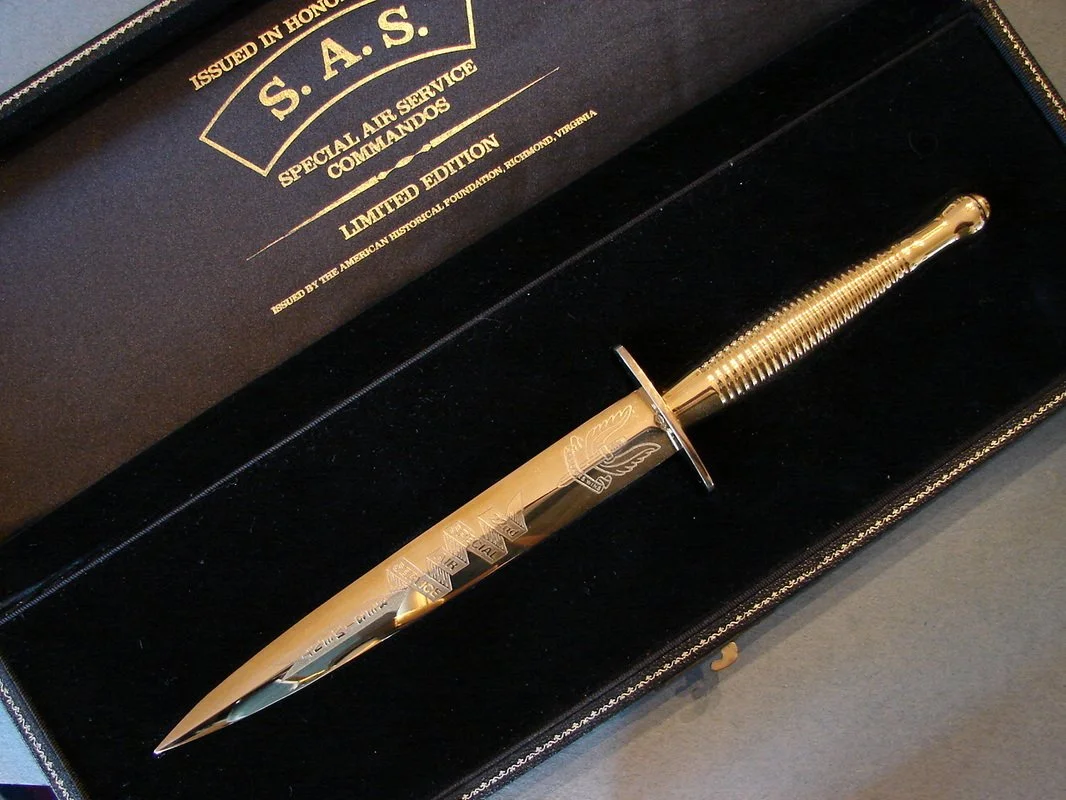
The Fairbairn–Sykes fighting knife is one of the most recognizable military blades of the twentieth century. Developed by William Ewart Fairbairn and Eric Anthony Sykes and first produced by Wilkinson Sword in 1941, it was created for British Commandos preparing to take the war into occupied Europe.
Its narrow double-edged blade, small guard and slender metal grip gave it the appearance of a modern dagger. It was light, quick in the hand and easy to carry close to the body. More importantly, it was designed around a particular kind of encounter: close, sudden and often conducted in darkness.
That narrow purpose separated it from the general-issue knives of the period. The Fairbairn–Sykes was not intended to open crates, prepare food or serve as a substitute for a field tool. It was a fighting knife in the most literal sense, shaped by the experience of two men who understood exactly what that demanded.
Design Intent
Before the war, Fairbairn and Sykes served with the Shanghai Municipal Police, where they encountered armed crime and violence at close range. Fairbairn reportedly took part in hundreds of confrontations during his years in Shanghai and studied the practical realities of hand-to-hand combat. Together, the two men developed weapons and techniques informed less by theory than by what they had seen work under pressure.
When Britain began forming its Commando units in 1940, their experience found a new audience. These troops were expected to raid coastlines, strike behind enemy lines and operate with a degree of speed and independence uncommon in the conventional Army. Their equipment needed to suit that role.
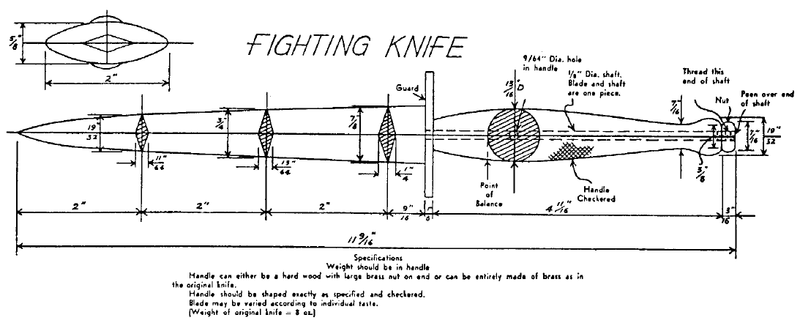
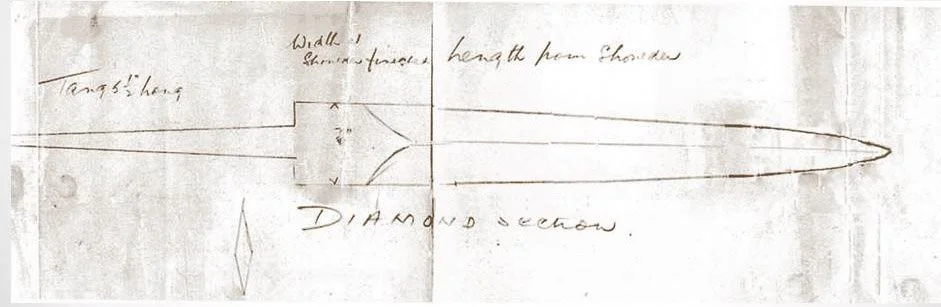
The knife Fairbairn and Sykes presented to Wilkinson Sword was built around penetration, control and ease of use. Its double-edged blade could be employed in either direction, while the symmetrical grip allowed it to be drawn without first checking its orientation. The blade was long and narrow enough to pass through heavy clothing without making the weapon unnecessarily cumbersome.
Its balance was equally deliberate. With much of the weight concentrated near the guard, the knife felt agile rather than blade-heavy. The grip could be held in several positions, and the modest crossguard protected the hand without interfering with concealment.
This specialization came with compromises. The narrow tip could be damaged by prying, and the blade was poorly suited to chopping or other routine camp work. Judged as a general-purpose field knife, it was limited. But that was never the standard by which it was meant to succeed.
The Fairbairn–Sykes was designed for the moment when a firearm was unavailable, undesirable or simply too slow. Everything else was secondary.
Evolution
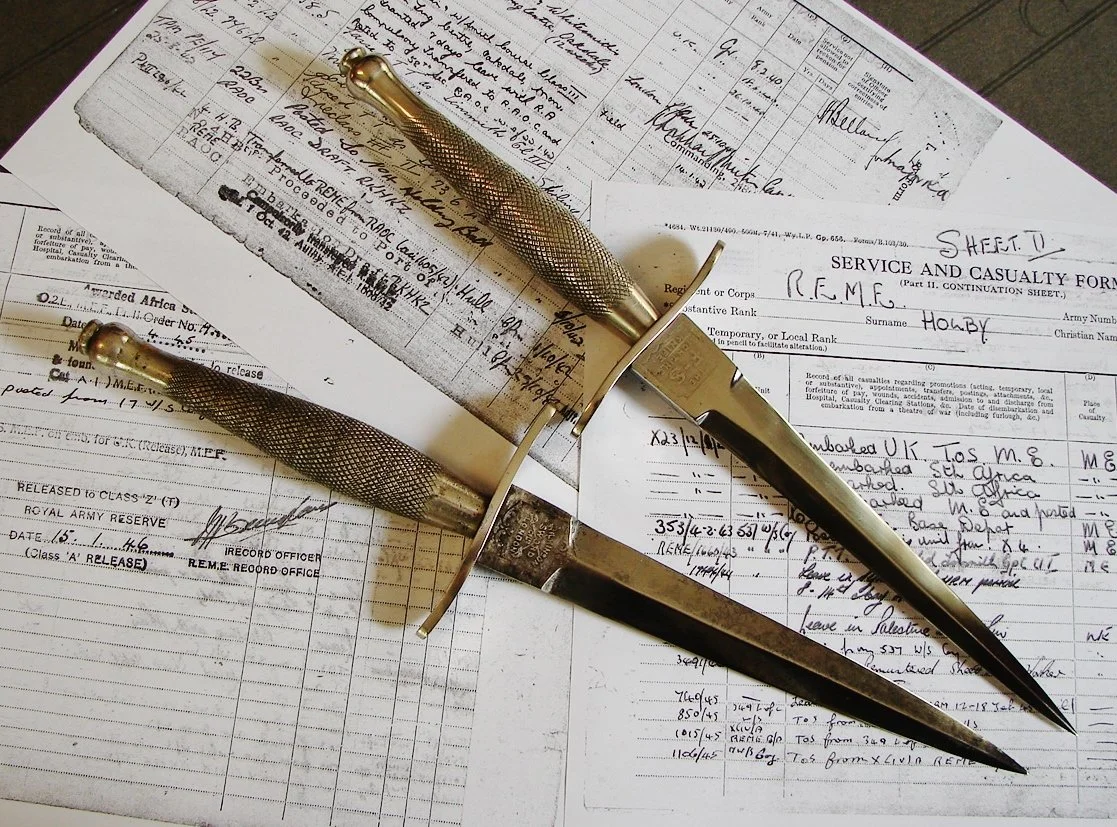
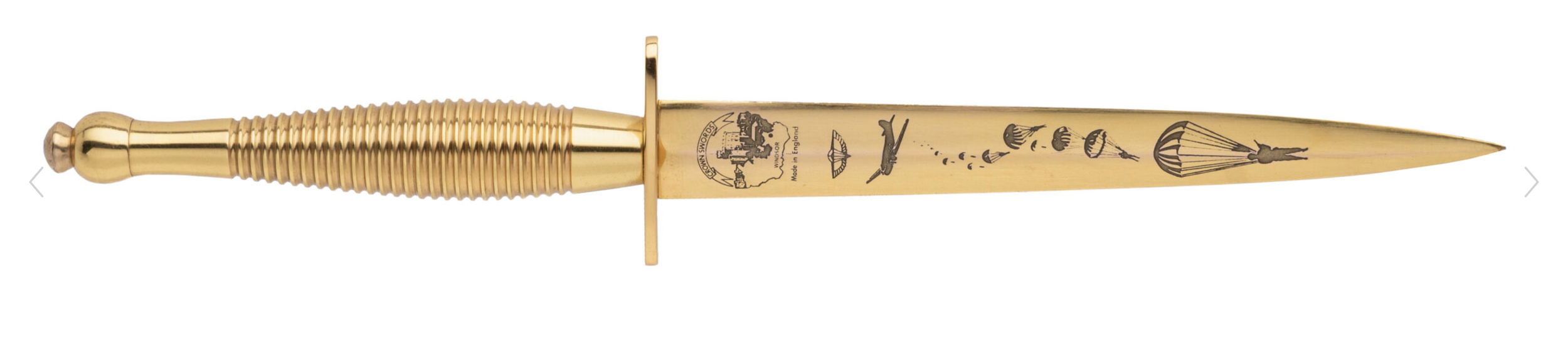
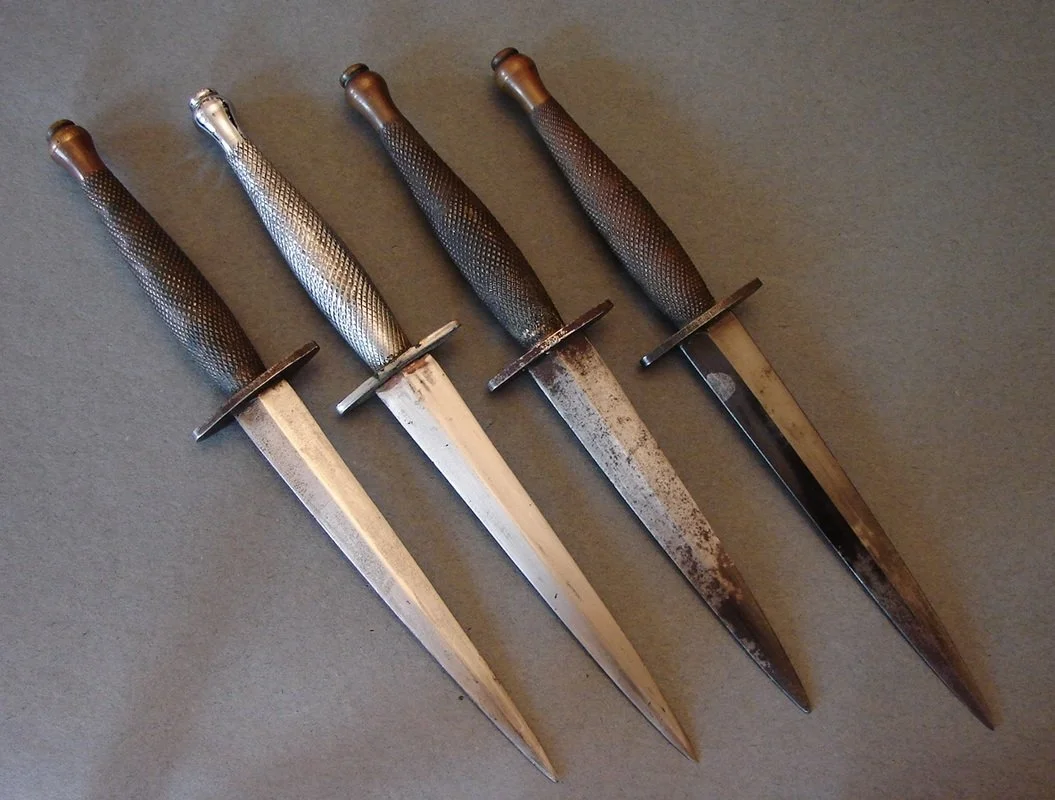
The first-pattern Fairbairn–Sykes reflected Wilkinson Sword’s heritage as much as the urgency of war. It featured a curved S-shaped guard, a finely knurled brass grip and a carefully finished blade. Early examples possess an almost ceremonial quality, despite having been made for anything but ceremony.
They were also relatively expensive and time-consuming to produce.
As Britain expanded its Commando forces, refinement began to give way to necessity. The second pattern simplified the guard and altered parts of the blade and hilt, allowing production to increase while preserving the knife’s essential balance and profile. Manufacturing soon expanded beyond Wilkinson to other British firms.
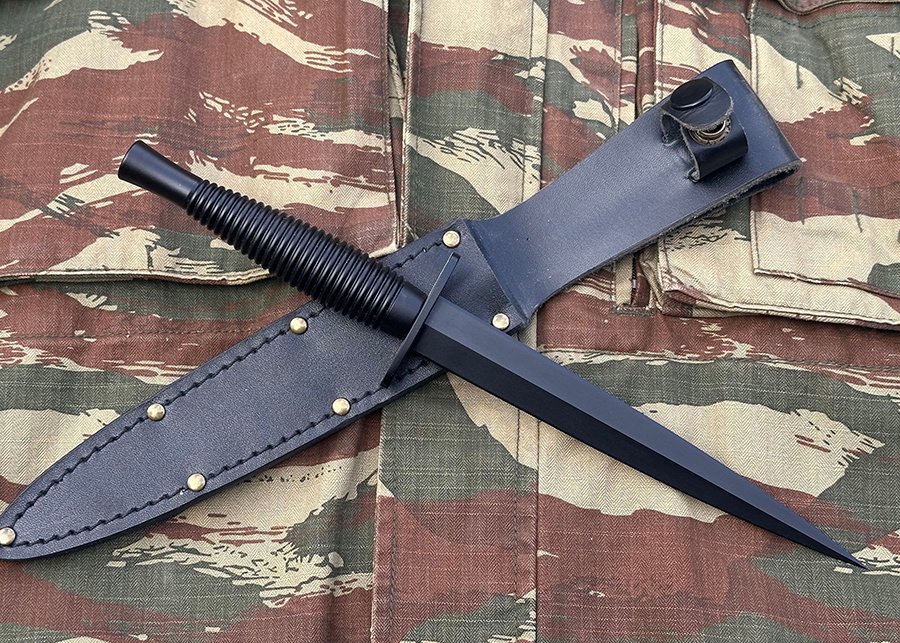
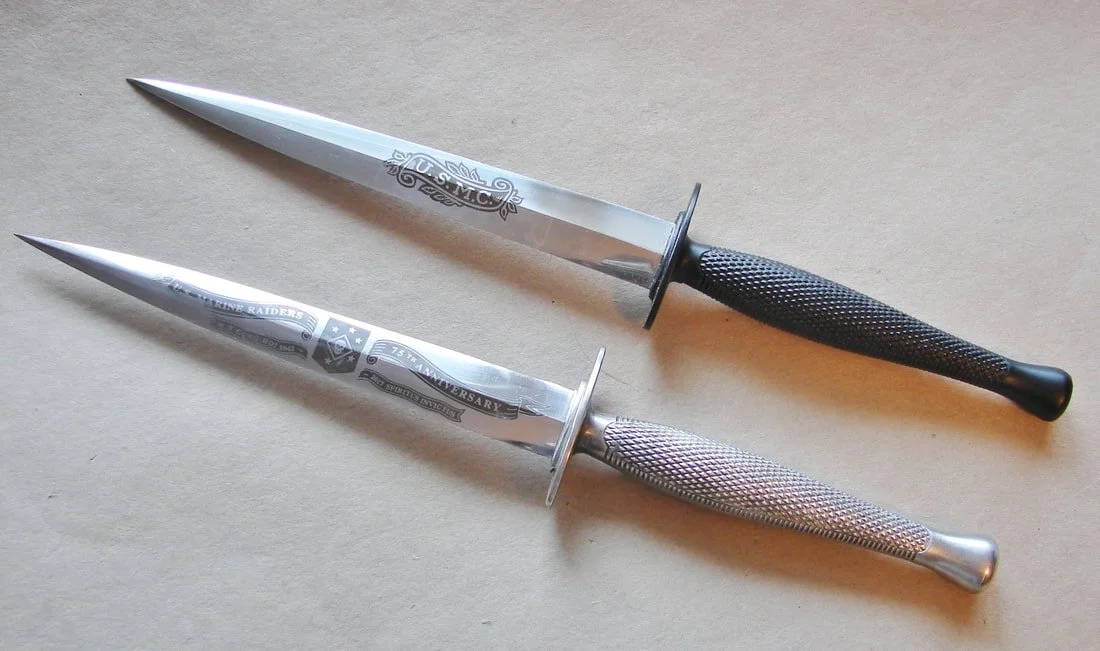
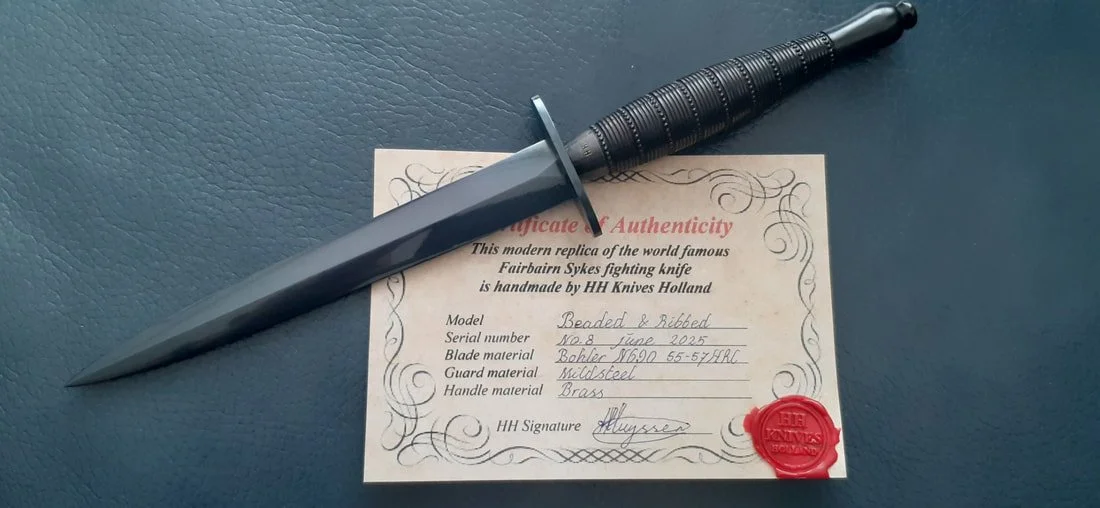
The third pattern went further. Its distinctive ringed grip could be cast more efficiently than the earlier diamond-knurled versions, and wartime examples varied considerably depending on who made them. Finishes became rougher. Materials changed. Small details were lost.
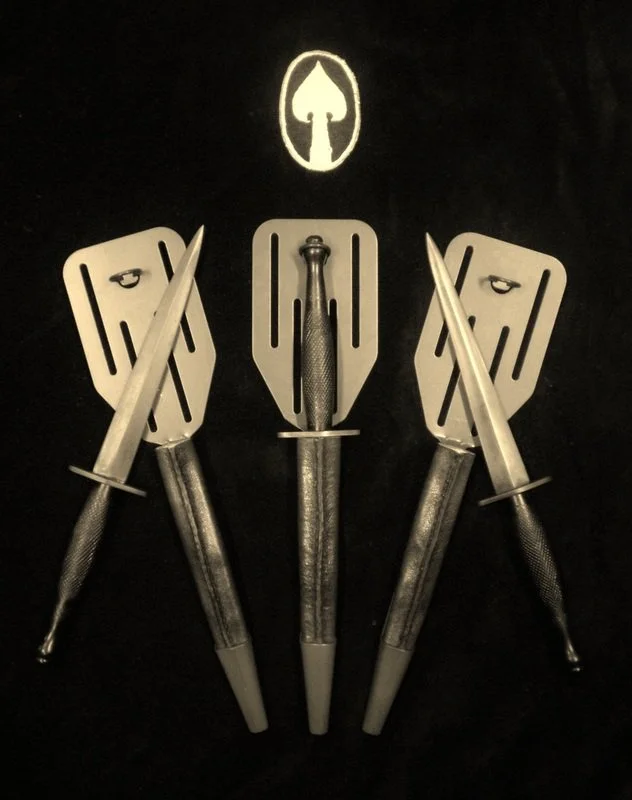
Its influence was already moving beyond Britain. In 1943, the Office of Strategic Services adopted an American interpretation commonly known as the O.S.S. Stiletto. Closely modeled on the Fairbairn–Sykes, it was issued to personnel working in espionage, sabotage and operations behind enemy lines. The American version was less finely made than its British counterpart, but the lineage was unmistakable. Even its unusual flat metal scabbard—produced by a Connecticut manufacturer better known for kitchenware—reflected the improvisational character of the organization carrying it.
From British coastal raiders to American intelligence officers, the knife had found the same kind of user: someone expected to work quietly, independently and close to the threat.
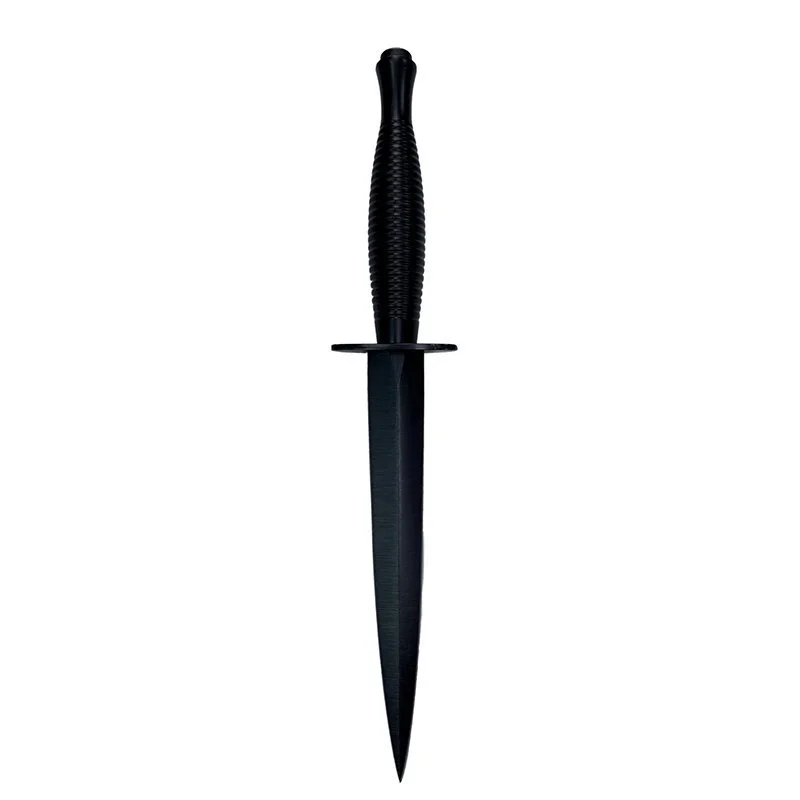
Placed beside one another, the wartime variants tell a broader story. The first-pattern knife was an object developed with care. Later versions were adapted for scale, copied across borders and carried into a different kind of war. Along the way, nearly every nonessential detail became open to revision.
The silhouette remained.
Why It Endures
The Fairbairn–Sykes entered service as a weapon but endured as an emblem.
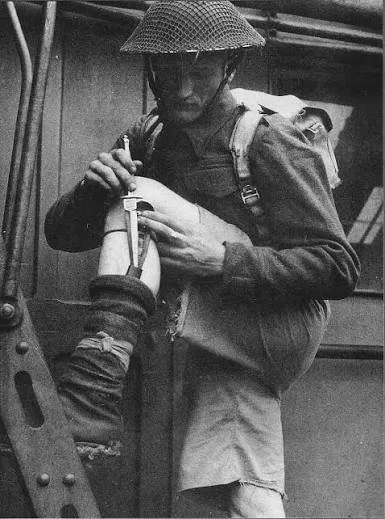
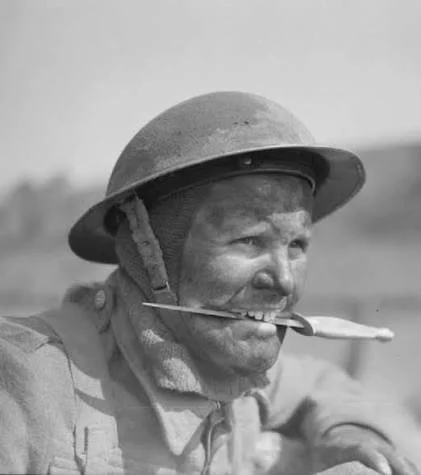
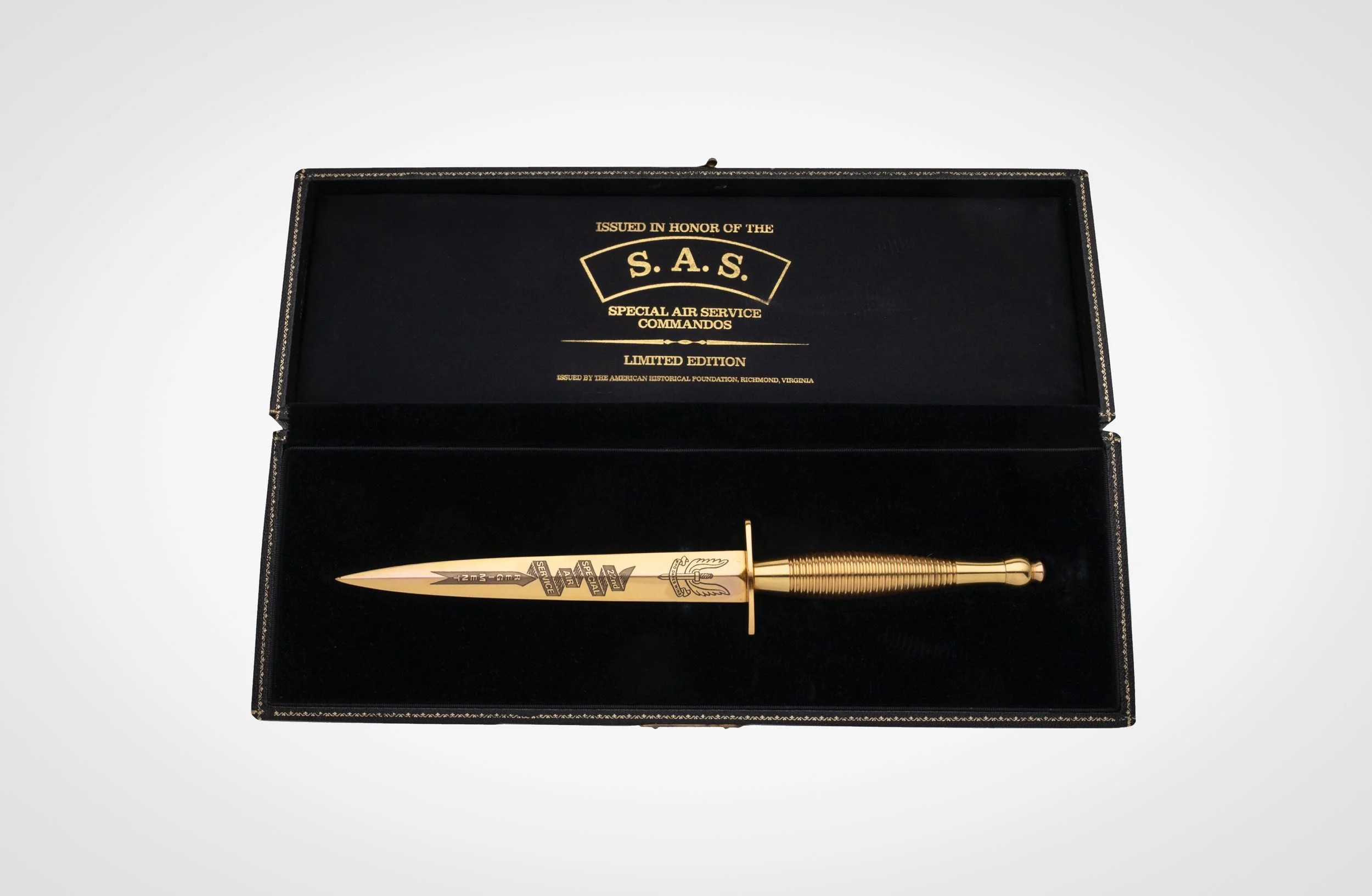
It became closely associated with the British Commandos, the Special Operations Executive and other personnel operating beyond the conventional battlefield. The knife appeared in recruiting imagery and on unit insignia, where its silhouette communicated a particular kind of service: selective, aggressive and discreet.
Its reputation was inseparable from those who carried it. Commandos wore it during raids across occupied Europe. Special-operations personnel carried it in North Africa and the Far East. Individual knives returned home bearing the wear, modifications and histories of their owners. What began as issued equipment accumulated the mythology of the units it served.
The image survived even as the knife’s practical role diminished. Modern field knives are generally stronger, more versatile and better suited to the range of tasks expected of them. The Fairbairn–Sykes itself remains a highly specialized design with real limitations. Yet versions of its silhouette still appear on military badges, memorials and special-operations insignia around the world.
That persistence is not nostalgia alone. Few objects express their purpose so clearly. Even without knowing its history, one can look at the Fairbairn–Sykes and understand that it was made for quiet, deliberate violence. Once its history is known, the form becomes nearly impossible to separate from the Commandos who carried it.
The SOTURI Perspective
The Fairbairn–Sykes did not become iconic because it was designed to look dangerous. It became iconic because its appearance was an honest consequence of its purpose.
There is a temptation in modern design to communicate capability through excess: more material, more features, more visual aggression. The Fairbairn–Sykes took the opposite approach. Its designers began with a specific requirement and removed anything that did not serve it.
That clarity also explains why the knife remained recognizable through several rounds of wartime simplification. The guard, grip and manufacturing methods could change because its essential identity had already been established. Its character did not depend on decoration. It came from proportion, function and intent.
The lesson is not that every object should be this specialized. It is that a lasting design must know what it is—and have the discipline not to pretend to be everything else.
// End of Briefing //
SOTURI